
Por Liliana Ospina
Rufino Vargas es un inmigrante mexicano, originario del estado de Guerrero, que ha vivido durante varias décadas en Detroit y es uno de los pioneros de los jardines urbanos en la ciudad.
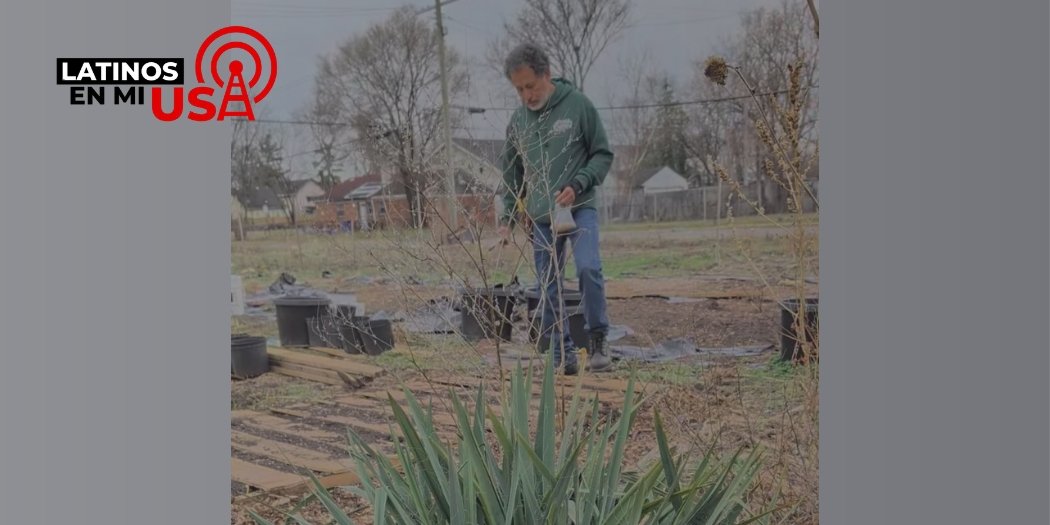
Lo conocí hace 10 años, cuando me invitó a conocer uno de sus cultivos en terrenos baldíos de Detroit. Al llegar, me encontré con cultivos de vegetales en medio de lotes donde antes había casas que fueron demolidas.
Y en el 2026, volví a visitarlo al mismo lugar porque me dijo que pronto se iba a ir.
Su pasión es cultivar para que la comunidad consuma alimentos frescos y compartir ese conocimiento con otros. Sin embargo, Rufino comenta que pronto quiere jubilarse y regresar a su natal México, después de vivir casi 40 años en Estados Unidos.
“El motivo de yo sembrar es que los chiles que a mí me gustan no los encuentro en las tiendas, y es lo que, a mucha gente, que son paisanos, les gusta. Me visitan y me compran”, dice Rufino.
En sus terrenos siempre hay una gran variedad de vegetales, desde calabazas, chiles, okra y berenjena. “Pero lo que más siembro son los tomatillos y los chiles”, agrega.
Rufino tiene tres terrenos en Detroit para cultivar: dos son de su propiedad y en uno de ellos cuenta con un invernadero; el tercero pertenece a la ciudad, pero tiene permiso para utilizarlo.
“La agricultura es bonita. Comemos sano, nos alimentamos bien y ahorramos dinero”, afirma.
Ante su inminente regreso a México, Rufino está invitando a la comunidad a visitarlo y aprovechar esta valiosa oportunidad para aprender a sembrar y así desarrollar sus propios cultivos.
Para él es importante que las personas aprendan a cultivar, ya que considera que durante las guerras lo primero que escasea es la comida, y quiere que la comunidad esté preparada.
“Este es mi último año. El que quiera venir a aprender un poco y por plantas, yo les voy a estar regalando plantas y dando clases, con tal de que me ayuden a sembrar y a limpiar. Así aprenden”, explica.
Rufino inicia muchos de sus cultivos en el invernadero a comienzos del año, para que cuando llegue la primavera ya estén listos. Su invernadero lo tiene desde hace 12 años y, según cuenta, gracias al apoyo de Keep Growing Detroit y una ayuda de $10,000, pudo adquirirlo y construirlo con el apoyo de algunos amigos.
Rufino dice que cuando se vaya se llevará su invernadero: “Esta estructura en México me vale medio millón de pesos mexicanos, pero la presidenta de México nos da la opción de llevarnos todas nuestras herramientas. Así que esta estructura se va conmigo a México. Me voy como los caracoles, con la casa en la espalda”.
Rufino le hace un llamado a la comunidad para que aprovechen sus conocimientos sobre agricultura urbana y eventualmente se vuelvan granjeros urbanos como él y cultiven sus vegetales en su casa.
Historias como la de Rufino son precisamente las que nos encanta mostrar de nuestra gente latina. Somos cerca del 20% de la población en Estados Unidos, y nuestras contribuciones son profundamente valiosas para el crecimiento y bienestar del país. Por eso, en Latinos En MI USA nos enfocamos en dar representación, visibilidad y voz a nuestra comunidad.
• • •
Rufino Vargas, Detroit’s Urban Farmer
By Liliana Ospina
Rufino Vargas is a Mexican immigrant from the state of Guerrero who has lived in Detroit for several decades and is one of the pioneers of urban gardening in the city.
I first met him 10 years ago when he invited me to visit one of his crops on vacant land in Detroit. When I arrived, I found vegetable gardens growing in lots where homes once stood before being demolished.
In 2026, I returned to visit him in the same place after he told me he would soon be leaving.
His passion is to grow food so the community can consume fresh produce and to share that knowledge with others. However, Rufino says he plans to retire soon and return to his native Mexico after living nearly 40 years in the United States.
“The reason I grow it is because the chilies I like aren’t available in stores, and it’s what many people—my fellow countrymen—enjoy. They visit me and buy from me,” Rufino says.
His land always features a wide variety of vegetables, including squash, chilies, okra, and eggplant. “But what I grow the most are tomatillos and chilies,” he adds.
Rufino has three plots of land in Detroit for farming: two are his own, and one of them includes a greenhouse; the third belongs to the city, but he has permission to use it.
“Agriculture is beautiful. We eat healthy, we nourish ourselves well, and we save money,” he says.
With his return to Mexico approaching, Rufino is inviting the community to visit him and take advantage of this valuable opportunity to learn how to grow their own food.
For him, it is important that people learn how to cultivate crops, as he believes that during times of war, food is the first thing to become scarce, and he wants the community to be prepared.
“This is my last year. Anyone who wants to come learn and get plants—I will be giving away plants and offering classes, as long as they help me plant and clean. That’s how they learn,” he explains.
Rufino starts many of his crops in the greenhouse early in the year so that by the time spring arrives, they are ready. He has had his greenhouse for 12 years and says that thanks to the support of Keep Growing Detroit and a $10,000 grant, he was able to obtain it and build it with the help of friends.
Rufino says that when he leaves, he will take his greenhouse with him: “This structure would cost me half a million Mexican pesos in Mexico, but the president of Mexico allows us to take all our tools with us. So this structure is going with me to Mexico. I’m like a snail—carrying my home on my back.”
Rufino is calling on the community to take advantage of his knowledge of urban agriculture so they can eventually become urban farmers themselves and grow their own vegetables at home.
Stories like Rufino’s are exactly the kind we love to share about our Latino community. We make up nearly 20% of the population in the United States, and our contributions are deeply valuable to the country’s growth and well-being. That is why, at Latinos En MI USA, we focus on giving representation, visibility, and a voice to our community.